
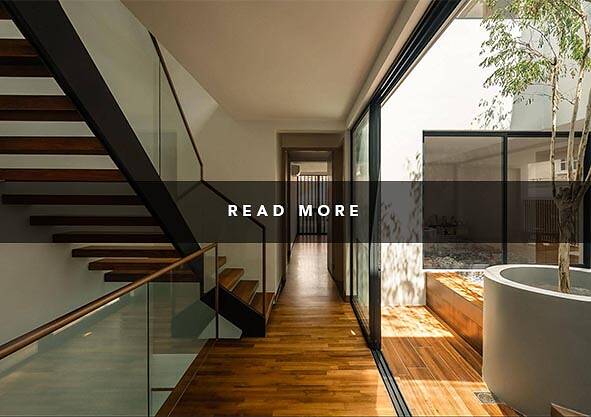
The impact of climate change in Singapore is real and we’re feeling the heat. Rising mean temperatures have made daily living more uncomfortable and even the rainy season brings limited respite due to the increased humidity.
As residents try to stay comfortable in the tropical swelter, some have turned to mechanical air conditioning to keep cool. However, this spikes energy consumption and can be a big drain on your utility bills. Excessive A/C usage also contributes to climate change, creating a frustrating dilemma for the sustainably-minded.
That’s why some private home owners are turning to modern landed house design strategies to increase passive cooling and maintain a comfortable temperature at home.
Here are some sustainable design strategies to help naturally cool down your house and enhance liveability, without the constant drain of electricity.
How to Optimise Landed Property Construction for Heat, Humidity, and Sun Path
Singapore’s climate is defined by intense solar radiation, consistently high temperatures, and pervasive, year-round humidity. Effective landed house designs must acknowledge these factors and work with nature, rather than against it. By doing so, homeowners can shed internal heat, harness natural airflow and shading, and mitigate external heat gain to achieve a naturally cool, comfortable abode.
- Strategic Home Orientation: The home’s elongated axis should face the harsh east-west sun path, allowing you to minimise direct solar exposure on larger facades. Conversely, the shorter sides (i.e. the front and rear) can be opened up to capture the prevailing breezes. If you’re looking at properties in specific regions (e.g. West Coast landed properties for sale in Singapore) this can also shape your buying choices.
- Maximising Cross-Ventilation: Cross-ventilation is the simplest and most effective way for how to cool down a room. This involves designing openings (e.g. windows, doors, vents) on opposite walls to allow airflow to sweep directly through rooms. When the windows are open, homeowners can use louvres, perforated screens, and privacy grilles for additional comfort, privacy, and security.
- Leveraging Vertical Airflow: Hot air naturally rises. When you have a multi-storey landed property, you can make full use of this natural mechanism to help cool the house down. Features like high ceilings, double-volume spaces, and airwells all act as vertical chimneys that strategically draw hot air upwards and out. This creates a continuous upward current that pulls cooler air from the lower levels and provides a constant, refreshing stream of air through the core of the house.
- Strategic Window and Door Placement: Windows and doors should be positioned not just for light, but also to capture and direct breezes across the interior, ensuring optimal air change rates. Casement and louvered windows can even be angled to capture and direct light breezes into the home, outperforming simple sliding windows.
Ensuring Thermal Comfort in Landed Properties through Shading and Material Choices

Once your landed property has been constructed, additional fittings and fixtures are key to maintaining a cool, comfortable temperature throughout the home.
- External Shading Devices: Blocking heat before it hits the glass is essential to cooling down the internal temperature of a home. Deep roof overhangs, fixed horizontal fins, and vertical louvres help block direct solar gain, particularly on the highly exposed east and west facades. These elements also help enhance a home’s aesthetic appeal while serving their practical functions.
- Greenery as Natural Shade: Biophilic design features and landscaping both beautify and cool down a home. Mature trees and climbing plants positioned near sun-exposed walls can provide natural, evaporative shade, while green roofs and vertical gardens provide excellent insulation and reduce the overall ambient temperature.
- Intelligent Material Selection: Materials with low thermal mass should be favoured to prevent heat absorption and re-radiation at night. This includes using light-coloured or reflective roofing materials, and high-performance glass with low-emissivity coatings to actively reflect solar energy.
- Microclimate Cooling: Ponds, pools, or water features in a courtyard or near a large window can introduce evaporative cooling to the immediate microclimate surrounding the house, further enhancing the home’s natural coolness.
The Brand New Land Difference: Integrating Luxury with Sustainability
As Singapore continues to experience the effects of climate change, homeowners should be proactive in seeking ways to cool down their house while maintaining sustainable, eco-friendly home designs.
Brand New Land recognises that true luxury is inseparable from comfort and responsibility. That’s why we’re committed to sustainable housing design features—from strategic airwell placement to utilisation of low thermal mass materials—to enhance the passive cooling of our landed properties. In doing so we achieve a base level of comfort for homeowners that significantly reduces reliance on mechanical cooling and offers a lower environmental footprint, ensuring a sustainable approach to luxury living.
Reach out to us for more information on our landed developer portfolio in Singapore and upcoming opportunities.